[Published: Saturday November 21 2026]
 Pro-Palestine doctors demand answers after GMC leaks personal data
LONDON, 21 Nov. - (ANA) - Doctors who have faced scrutiny over their advocacy for Palestine have raised concerns about their safety and confidentiality after the General Medical Council (GMC) mistakenly disclosed personal data relating to 223 medical professionals to a journalist at The Times, including information about complaints that did not meet the threshold for regulatory action.
Speaking exclusively to The New Arab (TNA), prominent doctors in the UK have called for pro-Palestine medical professionals to be treated fairly and protected after the GMC confirmed that it had shared their data with a journalist at The Times "in error".
The information included details of allegations of antisemitism and Islamophobia made against the doctors that did not meet the threshold for regulatory action.
"We have contacted the affected doctors to explain what has happened, to apologise and provide information and support," a GMC spokesperson told TNA. "We have requested the information sent in error is deleted. We have also reported the incident to the Information Commissioner's Office."
"We recognise the concern this will cause to both those impacted personally and other registrants and we are very sorry this happened," they added.
The GMC, an independent body responsible for regulating doctors, physician associates and anaesthesia associates to protect patient safety, sent The Times information that included GMC registration numbers, which could be used to identify the doctors on the regulator's register.
All the medical professionals involved have been the subject of complaints relating to either antisemitism or Islamophobia since the start of Israel's genocidal war on Gaza on October 2023.
The New Arab approached The Times for comment but had not received a response by the time of publication.
The disclosure came to light after the regulator emailed the affected doctors on Tuesday, prompting calls for the GMC itself to be investigated over the data breach.
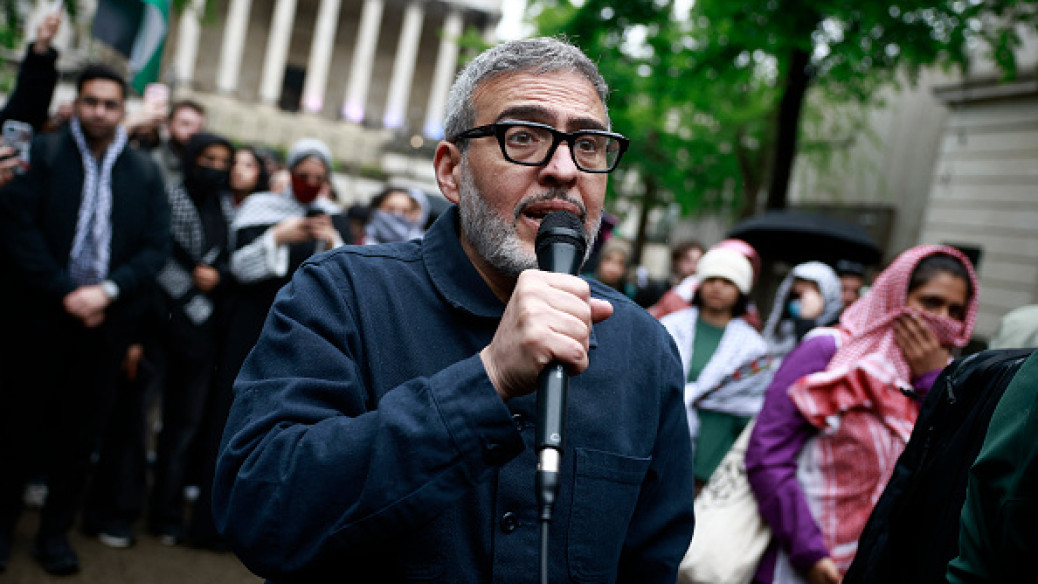
Dr Ghassan Abu Sittah, the prominent British-Palestinian plastic surgeon who volunteered in Gaza and was previously cleared of charges relating to support for or incitement of violence, terrorism or antisemitism, told TNA that his personal data had been exposed in the breach.
He said this had raised fears about his family's safety and uncertainty over whether the information had been shared exclusively with The Times or with other pro-Israel groups.
"This is a medical regulator, so the details that they have about us includes banking details, includes home addresses," he said. "It's both an invasion of privacy and it endangers the lives of these doctors."
"Now we are consulting with lawyers because there is a multitude of violations that this has, and the GMC is refusing even to tell us what information it has leaked for us to take precautions," Abu Sittah added.
While the GMC has confirmed that registration numbers and information relating to complaints were disclosed, Abu Sittah raised concerns about the wider personal information held by the regulator, including banking details and home addresses.
He said the GMC had not clarified precisely what information had been exposed, making it difficult for affected doctors to assess potential risks and take precautions.
Abu Sittah also suggested that the breach may have been linked to what he described as an apparent attempt by the medical regulator to launch a media campaign with The Times, intended "to mount a new series of hit pieces against doctors who've spoken out".
"My High Court case is being heard at the end of January, and my feeling is that they were preparing, with the Times, a media campaign against us," he said.
The GMC did not clarify its position over a possible coordinated media campaign against vocal pro-Palestine doctors.
Dr Nadeem Crowe, a British-Jordanian emergency medicine doctor, also confirmed to TNA that he had been directly affected by the disclosure.
He said he intended to pursue legal action against the GMC and was seeking urgent answers about why his information had been shared.
Crowe described feeling anxious about the prospect of further media coverage, harassment, reputational damage and threats to his personal safety.
He linked these concerns to his previous employment and legal experiences, as well as his advocacy for Palestine.
He previously brought claims against Royal Free London NHS Foundation Trust following his suspension in August 2024, which he said was connected to his anti-Zionist beliefs and Arab heritage.
"I sent a freedom of information to the GMC. I've sent a freedom of information to the Times, asking them what information they have and why they don't want to delete it," Crowe said.
"I've got my Royal Free Court case pending. My mum has stage four colon cancer. I cannot take on another level of anxiety, and I need to know by the end of today who has my data."
He also warned that the incident could contribute to further "censorship of doctors when it comes to Palestine advocacy".
"Why do I feel that I'm not safe to operate as a doctor who is against genocide—and it was one thing saying that I don't feel safe in the hands of the organisations targeting us, like [UK Lawyers for Israel] UKLFI," Crowe told TNA. "But now I can say I don't feel safe under the General Medical Council, who is the institution that is supposed to uphold reputation of the profession. I'm not safe in the hands of the GMC."
He continued: "If my data is not safe there, and they're going to treat me with this kind of contempt, then am I safe to be in this occupation at all anymore?"
Crowe also called for greater scrutiny of the GMC's handling of the breach and its senior leadership, demanding that chief executive Charlie Massey commission an independent investigation and publicly address the incident.
"I want to know why I've not heard anything from Charlie Massey, who is the head of the GMC, and should be making a public statement, and then frankly should be stepping down," he said. "He and anybody else who is, you know, in the kind of top brass of the GMC should be stepping down."
Crowe questioned why doctors should continue paying their GMC fees while the breach remained unexplained, calling for payments to be suspended until the regulator accounted for what had happened.
"I personally don't understand why I'm continuing to pay the GMC monthly whilst this is going on, so I think it would be the absolute default for them to allow us to stop all payments to the GMC. In fact, all doctors should stop any payments to the GMC whilst they explain how this data breach happened," he said.
The British Medical Association (BMA), the UK's trade union and professional body for doctors, told TNA that it had been made aware of the data disclosure to The Times.
It added that many of the doctors may not even have known that complaints had been made against them, as the GMC does not routinely inform doctors when allegations are received but do not warrant further action.
"While the GMC has said that the Times has said it will not be making the private details public at this stage, the newspaper will not be deleting the data," a BMA spokesperson told TNA. "This is entirely unacceptable and will compound the worry experienced by these doctors."
The spokesperson added, "Doctors who are the subject of complaints are entitled to confidentiality while investigations are ongoing, and after a decision has been made not to progress a complaint. The GMC must take action to ensure such a breach never occurs again."
Meanwhile, the UK-based Doctors' Association UK (DAUK) has also called for an independent investigation into the disclosure.
In a statement, the group urged GMC chief executive Massey to commission an "independent investigation, a full account for each affected doctor and urgent steps to secure deletion." - (ANA) -
AB/ANA/21 November 2026 - - -
|





 India/18 dead