[Published: Sunday November 08 2026]
 US offers $20m reward for Iran nuclear information despite obliteration claims
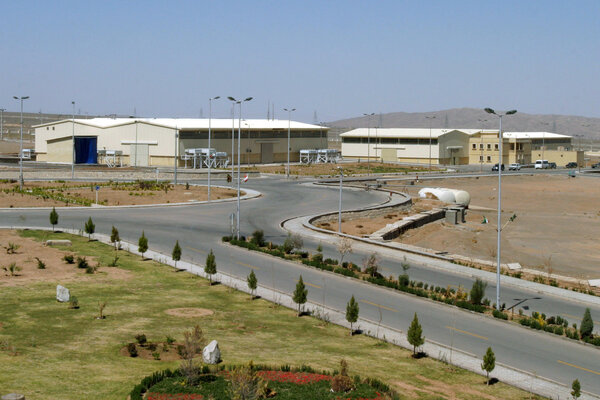
WASHINGTON, 08 Nov. - (ANA) - Washington is offering a $20 million reward "and possible relocation" for information about Iran's nuclear programme, the US military said Friday, despite President Donald Trump repeatedly saying that the US had effectively obliterated the programme.
A State Department programme, Rewards for Justice, "is offering a reward of up to $20 million and possible relocation for information about Iran's nuclear program, including its facilities, equipment, and associated personnel, such as those in the scientific community," US Central Command said on X.
The programme was established in 1984 under the State Department's national security rewards program to offer money for information that protects American lives and interests.
In its statement about the reward, the State Department said Iran's "lack of compliance with the IAEA (International Atomic Energy Agency) on safeguards obligations has led to the agency's loss of 'continuity of knowledge' regarding Iran's production and inventory of key components like centrifuges.
It gave no specific parameters on what information would yield a $20 million reward.
Significant contradiction: a timeline
Trump has repeatedly claimed that US strikes have destroyed Iran's nuclear programme, including during the 12-day Israel-Iran war in June 2025, and since 28 February when the US and Israel launched a joint war against Iran.
His latest statement came on Friday. Speaking from West Palm Beach, Florida, Trump said: "If we didn't hit Iran, you wouldn't have Israel today.
"If they had nuclear, they would have used nuclear. They would have obliterated the Middle East."
On 21 June 2025, after US forces bombed the nuclear facilities at Fordow, Natanz and Isfahan, Trump said in a televised address that Iran's key nuclear enrichment facilities had been "completely and totally obliterated." He described the operation as a "spectacular military success" and said its objective had been to destroy Iran's nuclear enrichment capacity.
Two days later, Trump reiterated the claim in a social media post, saying "monumental damage" had been inflicted on all of Iran's nuclear sites and that "obliteration is an accurate term". On 24 June, he went further, claiming he had destroyed "all nuclear facilities and capability." The White House subsequently published a statement defending his assessment and rejecting suggestions that the strikes had failed to destroy the programme.
However, independent assessments disputed Trump's characterisation. FactCheck.org reported that the strikes had damaged the facilities and set back Iran's enrichment programme, but had not completely destroyed the sites or the country's nuclear capabilities.
Trump repeated the claim after the US and Israel launched their new war against Iran at the end of February this year. In his announcement of the operation, he said the US had "obliterated" Iran's nuclear programme at Fordow, Natanz and Isfahan during the previous year's strikes. He then accused Tehran of attempting to rebuild the programme and continuing to develop long-range missiles.
On 2 March, Trump again referred to the "obliteration" of Iran's nuclear programme during Operation Midnight Hammer, saying Washington had warned Tehran against rebuilding it at another location.
On 11 March, speaking in Kentucky, he said the US had "totally obliterated Iran's nuclear potential," adding: "We obliterated it, they don't have nuclear potential." He then said Iran had started rebuilding its programme, arguing that the US needed to "finish the job."
In a televised address on 1 April, Trump again said the US had "totally obliterated those nuclear sites" in June 2025. He claimed Iran had subsequently sought to rebuild its programme at a different location, demonstrating that it had no intention of abandoning its pursuit of nuclear weapons.
In April, Trump also began referring to the enriched uranium believed to remain buried beneath the damaged facilities as "nuclear dust." On 16 April, he claimed Iran had agreed to hand it over to the United States, a claim Tehran did not confirm. The following day, he said Washington would recover the material with Iran's cooperation, using excavators to retrieve it from beneath the rubble. He reiterated the demand later that month and again in June, saying the material would eventually be retrieved and destroyed.
'Iran wants deal'
Separately, Trump has said Iran - which he stressed has had its economy and military severely damaged over eight months of war - is eager to end the conflict.
"We're dealing with them now. They want to make a deal very badly," he said.
Diplomatic efforts by mediators, including Pakistan and Qatar, have been in full swing in an attempt to prevent any resumption of fighting.
And on Tuesday Iran's President Masoud Pezeshkian said his government was still trying to resolve the crisis through dialogue.
Earlier this week Trump said he still had to "take care" of one or two targets, including so-called Pickaxe Mountain in central Iran, a suspected nuclear site which Tehran denies is such a facility. - (ANA) -
AB/ANA/08 November 2026 - - -
|